27/09/2024
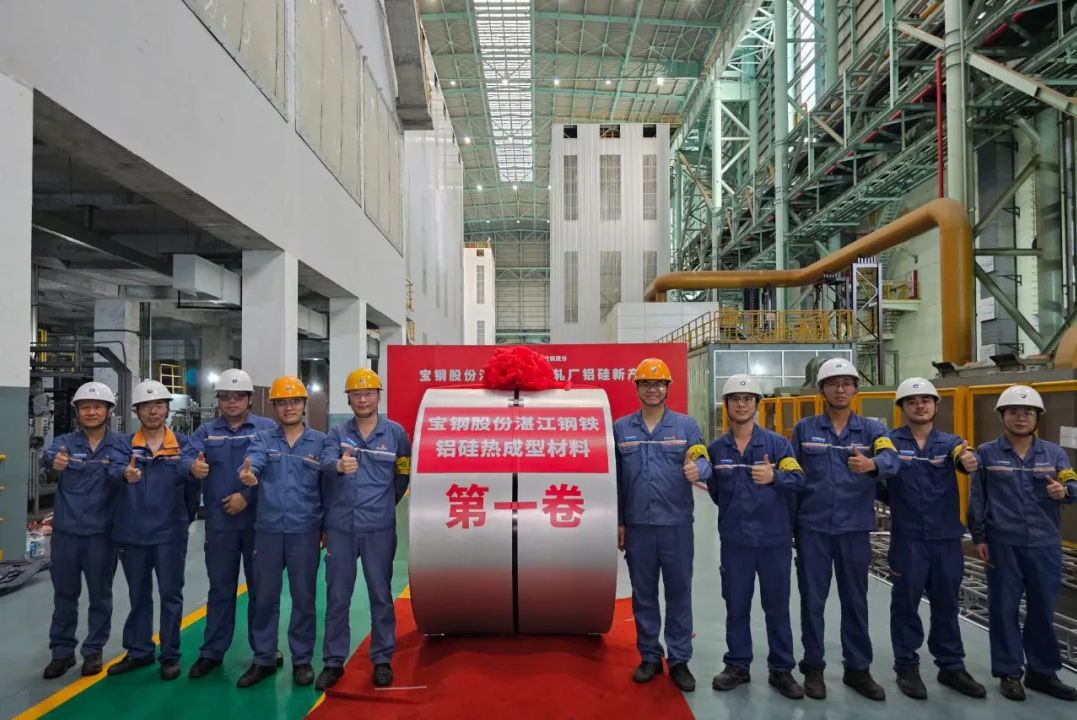
The First Roll of Aluminum-silicon Steel Coil was Successfully Rolled off the Aluminum-silicon Coating Production Line of Zhanjiang Iron and Steel (Baosteel Co., Ltd.)
On September 20, the new aluminum-silicon coating production line of Zhanjiang Iron and Steel (Baosteel Co., Ltd.) was officially put into production, and the first roll of qualified products was successfully rolled off the production line.
Read More
Rust spots on stainless steel are usually caused by contamination from carbon steel particles, salt exposure, moisture, or damage to the protective passive layer—not necessarily because the stainless steel itself is failing.
To remove rust spots:
Clean the area with warm water and a mild detergent.
Use a non-abrasive stainless steel cleaner or a baking soda paste.
For stubborn stains, apply a dedicated stainless steel rust remover according to the manufacturer's instructions.
Rinse thoroughly with clean water.
Dry the surface completely with a clean cloth.
Avoid using steel wool or ordinary steel brushes, as they can leave iron particles behind and cause additional rust staining.
If the rust is only on the surface, cleaning is usually enough to restore the appearance of the stainless steel. In more severe cases, re-passivation may be required to restore the material's corrosion resistance.
High-quality stainless steel products from manufacturers such as Ratanakar Wire Private Limited offer excellent corrosion resistance, but regular cleaning and maintenance are still important for long-term performance.
In most cases, rust spots on stainless steel are a surface issue and can be removed successfully with proper cleaning and care.
The quality of bridge steel plates is influenced by various factors, primarily including the following aspects:
1. Material Selection: Bridge steel plates are typically manufactured using materials such as concrete or reinforced concrete. Material quality directly impacts the strength and durability of the plates. Selecting high-quality materials and ensuring the stability and consistency of raw materials are crucial for enhancing the quality of the bridge plates.
2. Structural Design: The structural design of bridge steel plates must be rational and scientifically sound, meeting the project's operational requirements. The design should account for factors such as environmental loads, deformation limits, and seismic resistance to ensure the plates remain stable and reliable during service.
3. Construction Process: Construction techniques directly affect the quality of the bridge steel plates. Processes such as formwork erection, concrete pouring, and curing must be carried out according to specifications to ensure a smooth surface free from defects like shrinkage cracks or hollow spots, thereby guaranteeing strength and durability.
4. Quality Control: A scientific quality control system should be established during production and construction to strictly monitor and inspect every stage of the process. Quality control measures covering materials, structure, and construction techniques ensure that the bridge steel plates meet design specifications.
5. Environmental Factors: Bridge steel plates are subject to environmental influences during use, such as temperature fluctuations, humidity changes, and chemical corrosion. Measures such as appropriate material selection and enhanced maintenance can mitigate the impact of these environmental factors on quality.
6. Inspection and Maintenance: Regular inspection and maintenance are vital for ensuring quality. Periodic inspections allow for the timely detection of issues, enabling repairs and reinforcement that extend the service life of the bridge steel plates.
In summary, the quality of bridge steel plates is influenced by a range of factors, including material selection, structural design, construction processes, quality control, environmental conditions, and inspection and maintenance. Only by addressing all these aspects effectively can the quality of the bridge steel plates be guaranteed to meet expected standards.
Silicon steel sheets are essentially very low-carbon steel sheets with a silicon mass fraction of 0.5% to 5%.Based on application, they can be classified into motor-grade silicon steel sheets (silicon content usually below 2.5%, thickness generally 0.5 mm) and transformer-grade silicon steel sheets (silicon content usually 2.5%–4.5%, thickness generally 0.35 mm).Based on production method, they are categorized into hot-rolled and cold-rolled silicon steel sheets; cold-rolled sheets are further subdivided based on grain orientation into grain-oriented silicon steel (used for transformers) and non-oriented silicon steel (used for motors).They can also be classified according to operating conditions: those used in strong magnetic fields (predominantly in the electric power industry; this is the most common and widely used type) versus weak magnetic fields (mainly in the telecommunications industry), as well as those designed for power frequency versus high-frequency applications.For high-frequency applications, silicon steel sheets typically have a thickness of 0.1–0.2 mm to minimize eddy current losses, while those used in pulse transformers can be as thin as 0.05 mm or less.
China Steel Market
Empowering small and medium-scale steel purchasing
Hot search words:
China Rebar prices China Wire Rod Prices Welded Steel Pipe Prices